
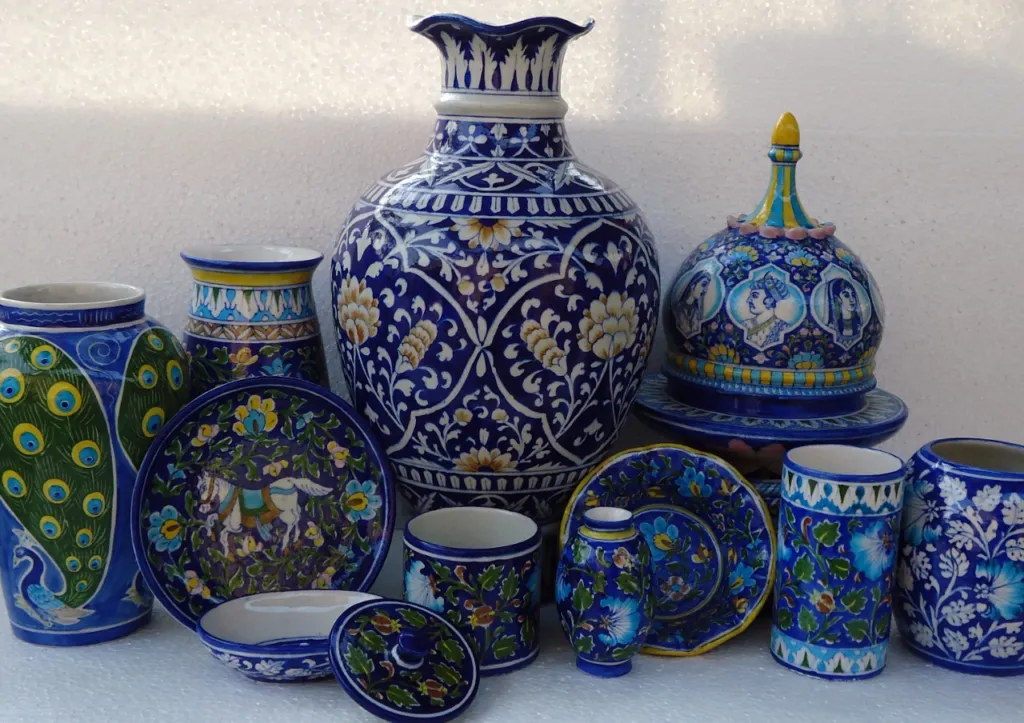
The Jaipur Blue Pottery Art Centre Jaipur Rajasthan, is a living heritage of ceramic craftsmanship, preserving the city’s most beautiful art tradition. Nestled in the heart of the Pink City, this centre showcases Blue Pottery, an exquisite art form renowned for its vibrant cobalt blue hues, intricate floral motifs, and unique quartz-based glazing. Originating in Persia and refined over centuries in Jaipur, Blue Pottery reflects the city’s rich cultural tapestry, blending Mughal aesthetics with Rajasthani creativity.
Its delicate yet durable creations—ranging from vases and tiles to cups and platters—have made ceramic pottery Jaipur a symbol of artistic excellence, drawing tourists, designers, and collectors from across the globe. Stepping into the centre, visitors are greeted by shelves adorned with handcrafted treasures, each piece telling a story of skill and tradition. This blog invites you to explore the history, artistry, and allure of the Jaipur Blue Pottery Art Centre, a must-visit destination for anyone captivated by India’s handicraft legacy.
The Origin and History of Blue Pottery in Jaipur
The Jaipur Blue Pottery Art Centre Jaipur Rajasthan stands as a testament to the enduring legacy of Blue Pottery, an art form with roots stretching back centuries. Introduced to Jaipur in the early 19th century, Blue Pottery arrived through Persian artisans who brought their intricate ceramic techniques to the royal courts. Influenced by Persian and Mughal aesthetics, this craft captivated the city with its vivid cobalt blue glazes and delicate floral patterns, giving rise to what is now celebrated as Jaipur Blue Art Pottery. Under the patronage of Maharaja Sawai Ram Singh II, a visionary ruler passionate about the arts, Blue Pottery flourished. He invited skilled potters to Jaipur, encouraging them to adapt Persian methods to local materials, such as quartz and glass, which gave the Ceramic Pottery of Jaipur its distinctive durability and sheen.
As the craft evolved, it took on a uniquely Rajasthani identity, blending Mughal motifs with regional designs like lotus flowers and geometric patterns. Early artisans, often working in small workshops, perfected the labor-intensive process of hand-painting and glazing each piece. The craft soon spread beyond Jaipur’s royal palaces to nearby areas like Sanganer and Civil Lines. In Sanganer Blue Pottery workshops, artisans honed techniques suited to the local clay, while Neerja Blue Pottery Civil Lines later emerged as a hub for refined, modern designs. This rich history, woven with royal support and artisanal dedication, continues to thrive at the Jaipur Blue Pottery Art Centre, where visitors can witness the timeless artistry of this cultural treasure.
What Makes Jaipur Blue Pottery Unique
It the Jaipur Blue Pottery Art Centre Jaipur Rajasthan, visitors discover the singular allure of Jaipur ki Blue Pottery, a craft that stands apart from other ceramic art forms worldwide. Unlike traditional pottery, this art form eschews clay entirely, relying instead on a distinctive blend of quartz, glass, and gum to create its delicate yet durable pieces. The result is Ceramic Pottery Jaipur that captivates with its lightweight texture and luminous finish, showcasing vibrant cobalt blue and turquoise shades that define Jaipur Blue. These hues, paired with intricate floral and geometric designs inspired by Persian and Mughal aesthetics, create a visual language that feels both timeless and distinctly Rajasthani. The centre’s shelves, lined with vases, tiles, and platters, invite visitors to trace the delicate brushstrokes of artisans who pour their skill into every piece.
What further elevates Jaipur Glass and Potteries is its eco-friendly and lead-free production process, a testament to the craft’s harmony with nature. The following features highlight its uniqueness:
- No clay used — only quartz, glass, and gum, creating a lightweight and resilient material.
- Low-fired at 800°C, ensuring energy efficiency and a smooth, glossy finish.
- Characteristic Persian-style motifs, featuring floral patterns and geometric precision that reflect centuries-old artistry.
This sustainable approach, combined with its striking visual appeal, makes Jaipur Blue Pottery a cherished art form, celebrated by collectors and eco-conscious buyers alike. A visit to the Jaipur Blue Pottery Art Centre reveals not just a craft, but a cultural legacy crafted with care and creativity.
Jaipur Blue Pottery Art Centre Jaipur Rajasthan – A Cultural Hub
The Jaipur Blue Pottery Art Centre Jaipur Rajasthan stands as a vibrant beacon of cultural preservation, inviting visitors to immerse themselves in the timeless craft of Blue Pottery. Located near the bustling Amer Road, close to the iconic Jawahar Kala Kendra, this centre is easily accessible to tourists exploring Jaipur’s artistic heritage. Established in the late 20th century by a collective of passionate artisans and cultural enthusiasts, the centre was founded with a clear purpose: to safeguard and promote the traditional artistry of Jaipur Blue Art and Handicrafts. Over the decades, it has grown into a cherished destination, recognized as the Best Place to Buy Blue Pottery in Jaipur, where the legacy of this craft is not only preserved but brought to life through hands-on experiences.
Stepping into the Blue Pottery Jaipur Shop at the centre, visitors are greeted by the gentle hum of artisans at work, shaping quartz-based dough, glazing delicate surfaces, and painting intricate floral motifs with practiced precision. The centre offers workshops and live demonstrations, allowing guests to witness the meticulous process behind each piece, from mixing raw materials to firing at low temperatures. These interactive sessions provide a rare glimpse into the skill and patience required to create Blue Pottery, making the experience both educational and inspiring. Tourists, collectors, and art lovers leave with a deeper appreciation for the craft, often carrying home a handcrafted vase or tile as a tangible piece of Jaipur’s cultural soul.
The Blue Pottery Process – Step-by-Step Craftsmanship
At the Jaipur Blue Pottery Art Centre Jaipur Rajasthan, the creation of Blue Pottery is a meticulous dance of skill and tradition, transforming humble materials into works of art. The process, perfected by Blue Pottery Manufacturers in Jaipur, involves a series of precise steps, each demanding patience and expertise. This Ceramic Pottery of Jaipur is renowned for its unique composition and vibrant aesthetic, a craft passed down through generations, with artisans teaching their children the secrets of their trade in workshops filled with the scent of wet quartz and the soft clink of tools. The following steps outline the artistry behind Jaipur Blue Art Pottery, revealing the dedication that brings each piece to life.
- Preparation of Dough: The process begins with crafting a pliable dough from quartz, glass, and gum, eschewing traditional clay. This mixture, ground into a fine powder and blended with water, creates a lightweight yet sturdy base unique to Blue Pottery.
- Moulding and Shaping: Artisans press the dough into traditional moulds or shape it by hand, carving intricate patterns with precision. This stage requires a steady hand to ensure each piece, from tiles to vases, is perfectly formed.
- Drying and Smoothening: The moulded pieces are sun-dried under Jaipur’s warm sun, then smoothed with care to eliminate imperfections. This step prepares the surface for the vibrant designs to come.
- Painting and Designing: Using natural oxides, artisans paint delicate floral and geometric motifs, with cobalt blue and turquoise dominating the palette. Each stroke reflects years of practice, ensuring the patterns are both intricate and harmonious.
- Glazing and Firing: A final glaze, often made from glass and lead-free compounds, is applied before firing at 800°C. This low-temperature firing locks in the glossy finish, giving Blue Pottery its signature sheen.
The precision involved in each step underscores the artistry of Jaipur’s craftsmen, who dedicate years to mastering their craft. At the Jaipur Blue Pottery Art Centre, visitors can observe this generational knowledge in action, as young apprentices learn from seasoned artisans, ensuring the legacy of Blue Pottery endures for centuries to come.
Famous Blue Pottery Centres and Shops in Jaipur
For enthusiasts seeking authentic Blue Pottery Jaipur Shop experiences, Jaipur offers a wealth of renowned centres and outlets where tradition meets artistry. These spots, often clustered in artisan-rich areas like Sanganer and the Jaipur Glass & Potteries district, provide opportunities to purchase heirloom-quality pieces while supporting local craftsmanship. Below are some top recommendations, each preserving the essence of Jaipur Blue Art and Handicrafts through unique offerings.
Neerja Blue Pottery, Civil Lines Jaipur
Located in the upscale Civil Lines area, Neerja Blue Pottery Civil Lines stands out for its export-quality items, from intricately painted tiles to elegant vases. Founded in 1978 by Leela Bordia, this showroom boasts over 300 designs crafted by thousands of local artisans, making it a prime destination for collectors seeking premium Ceramic Pottery Jaipur. With a focus on global standards, visitors appreciate the seamless blend of heritage patterns and custom orders.
- Location: S-19, C-Scheme Extension, Bhawani Singh Road, Shop No., Civil Lines, Jaipur, Rajasthan 302001 (near Jacob Road, Madrampur).
- Timings: Open daily from 10:00 AM to 5:30 PM.
- Days Open: All days (Monday to Sunday).
- Average Prices: INR 100–200 for small items like door knobs; INR 1,500 for larger decorative wall plates; overall range from INR 100 to several thousand for export-quality vases and tiles (competitive but premium pricing, often 50–75% higher than local markets).
Shiv Kripa Blue Pottery Jaipur Rajasthan
Established in 1998 in Sanganer Bazar, Shiv Kripa Blue Pottery Jaipur Rajasthan is celebrated for its traditional handmade pieces, where family members oversee every stage from design to glazing. This workshop offers a glimpse into authentic processes, producing durable platters and decor that embody Rajasthan’s ceramic legacy. It’s an ideal stop for those desiring genuine, story-rich Jaipur Blue Art Pottery at competitive prices.
- Location: 207, New Sanganer Road, Sanganer Bazar, Behind Sparsh Hospital, Jaipur, Rajasthan 302029 (also listed as Sanga Sathu Road, Laxmi Colony).
- Timings: Typically 9:00 AM to 7:00 PM (based on general artisan workshop hours; confirm via contact for exact).
- Days Open: Monday to Saturday; closed Sundays.
- Average Prices: Reasonable and competitive; small items like jewelry boxes start at INR 200–500, plates and vases INR 500–2,000; bulk/wholesale discounts available for businesses.
Sakshi Blue Pottery Jaipur
Located near Nagar Nigam Stadium in Sanganer, Sakshi Blue Pottery Jaipur excels in modern interpretations of classic designs, transforming timeless motifs into contemporary tableware and accents. As a family enterprise, it balances innovation with tradition, appealing to buyers looking for fresh takes on Blue Pottery Sanganer. Short visits here reveal vibrant collections that bridge old-world charm with today’s aesthetics.
- Location: 105/214, Laxmi Colony, Near Nagar Nigam Stadium, Rajasthan State Highway 12, Ganesh Colony, Sanganer (Dada Gurudev Nagar), Jaipur, Rajasthan 302029.
- Timings: 10:00 AM to 6:00 PM.
- Days Open: Monday to Saturday; closed Sundays.
- Average Prices: Affordable for handcrafted items; mugs and small vases INR 300–800, modern tableware and accents INR 500–1,500; custom orders available at varying rates.
Ram Gopal Blue Pottery Jaipur
A family-run gem on Tonk Road opposite Sanganer Airport, Ram Gopal Blue Pottery Jaipur upholds heritage designs through workshops led by descendants of Padma Shri Kripal Singh Shekhawat’s pupils. Specializing in hand-painted plates and figurines, it offers immersive sessions for hands-on learning. This spot is perfect for enthusiasts wanting to engage deeply with Ceramic Pottery of Jaipur.
- Location: Plot No. 81, Vishnu Garden, Tonk Road, Opposite Sanganer Airport, Jaipur, Rajasthan 302015.
- Timings: 10:00 AM to 6:00 PM.
- Days Open: Monday to Saturday; closed Sundays (workshops available daily except Sundays).
- Average Prices: Mid-range for artisanal quality; small figurines and plates INR 400–1,000, larger hand-painted items like vases INR 1,000–3,000; workshop fees around INR 500–1,000 per session.
Blue Pottery Sanganer Jaipur
In the heart of Sanganer, known for its rural artisan clusters, Blue Pottery Sanganer Jaipur provides a wholesale and authentic experience amid buzzing workshops. Here, visitors source bulk Sanganer Blue Pottery items like surahis and coasters directly from makers, immersing in the craft’s grassroots vitality. It’s a haven for those pursuing unadulterated, village-born treasures.
- Location: Various artisan clusters in Sanganer town, Jaipur, Rajasthan 302029 (key spots include Laxmi Colony near Stadium, Gopal Ji ki Talai, or Muhana Mode; visit for rural wholesale hubs).
- Timings: Generally 9:00 AM to 7:00 PM.
- Days Open: Monday to Saturday; closed Sundays.
- Average Prices: Wholesale-focused and budget-friendly; bulk coasters or surahis INR 100–300 each, larger sets INR 500–1,500; individual retail slightly higher.
These centres not only serve as the Best Place to Buy Blue Pottery in Jaipur but also foster the ongoing revival of this Mughal-inspired art, ensuring its patterns continue to adorn homes worldwide.
What to Look For: Authentic vs. Imitation
Distinguishing genuine ceramic pottery Jaipur from imitations requires attention to detail, as mass-produced replicas often flood tourist markets with inferior quality. Authentic Blue Pottery, rooted in Turko-Persian traditions, uses a quartz, glass, and gum mixture—no clay—resulting in a lightweight, semi-translucent body with a low-fired, glossy glaze at around 800°C. Genuine pieces exhibit even cobalt blue hues derived from natural copper oxide, intricate hand-painted motifs like arabesques or florals without smudges, and a smooth, non-porous finish that resists chipping under gentle handling. In contrast, fakes may feel heavier, show uneven glazing, faded colors, or machine-like uniformity, often made with clay and chemical dyes for quicker production. At reputable blue pottery Jaipur shop outlets, such as those with family-run workshops, visitors can observe live demonstrations to verify craftsmanship firsthand.
Recommended Shops and Workshops
Jaipur’s premier blue pottery shop in Jaipur destinations cater to collectors and decorators alike, featuring an assortment of home décor items like vases and lamps, functional tiles and plates, and delicate jewelry such as beaded necklaces. These venues emphasize handmade excellence, with many offering customization for export-quality orders. Below is a curated selection, each providing a unique lens on the craft:
- Jaipur Blue Pottery Art Centre (Amer Road): A cornerstone for authentic acquisitions, this multi-generational hub boasts over 350 designs, including decorative tiles, serving platters, and elegant lamps. Ideal for tourists seeking immersive experiences, it includes free demonstrations and workshops, making it a top best place to buy blue pottery in Jaipur for both utility and heirloom pieces.
- Neerja Blue Pottery (Civil Lines): Renowned for export-grade sophistication, this showroom excels in custom home décor like wall tiles and intricate jewelry sets, alongside classic plates. Founded by Leela Bordia in 1978, it supports thousands of artisans and features over 300 patterns, perfect for art lovers desiring premium, globally inspired motifs.
- Shiv Kripa Blue Pottery (Sanganer): A family-operated manufacturing unit since 1998, this workshop specializes in traditional handmade vases, coasters, and lamps, with more than 1,000 designs available. Visitors appreciate the on-site pottery classes and bulk options for home décor enthusiasts exploring Jaipur Blue Art Pottery.
- Kripal Kumbh (Amer Road): Honoring the legacy of Padma Shri Kripal Singh Shekhawat, this atelier offers exclusive heritage tiles, plates, and decorative lamps blending classical and modern aesthetics. It’s a haven for discerning buyers, with live artisan sessions highlighting the no-clay process.
These recommendations extend to Sanganer’s artisan clusters for a wholesale, rural immersion, where raw materials meet finished jewelry and planters at competitive rates.
Blue Pottery Manufacturers in Jaipur
Jaipur, with its deep-rooted tradition in handicrafts, serves as a vital hub for blue pottery manufacturers in Jaipur, where skilled artisans transform quartz-based mixtures into globally coveted ceramics. These manufacturers, ranging from family-run workshops to larger export-oriented units, play a pivotal role in sustaining the craft’s legacy while driving international trade. Prominent players such as Neerja International Inc., established in 1978 by Leela Bordia, lead the field with over 300 intricate designs in tiles, vases, and lamps, exporting to diverse markets and employing thousands of local hands.
Similarly, Sakshi International excels in blending heritage motifs with modern utility pieces, while Shiv Kripa Blue Pottery and Ram Gopal Blue Pottery uphold traditional techniques through generational expertise. These blue pottery manufacturers Jaipur contribute significantly to exports, with shipments totaling hundreds annually, bolstering Rajasthan’s economy through high-value, handmade goods that embody Persian-Mughal influences adapted to local aesthetics.
Beyond production, Jaipur fosters a supportive ecosystem for small artisans and export houses, integrating them into supply chains that amplify their reach. Clusters in Sanganer and Kot Jewar enable micro-entrepreneurs like Ramnarayan Prajapati’s RN Blue Art Potteries to train over 300 individuals, providing stipends and marketing assistance to achieve financial independence. Export houses often source bulk from these units, fulfilling large orders—such as a 45,000-piece shipment to the US and UK—while government-backed clusters ensure access to modern tools like gas kilns, enhancing efficiency without compromising authenticity.
Government and NGO initiatives further fortify this sector, promoting preservation and global visibility. The Rural Non-Farm Development Agency (RUDA), founded in 1995, spearheads design interventions and GI registration for Blue Pottery, alongside training in Pokharan and Jaipur to diversify products from decorative to utilitarian items. Under the One District One Product (ODOP) scheme, Jaipur’s Blue Pottery is prioritized for export promotion through State Export Promotion Committees, while NGOs like Gramin Blue Art Pottery Samiti organize workshops and trade fair participation. The Sawai Ram Singh Shilp Kala Mandir continues to offer skill-building courses, ensuring the craft’s evolution amid modern demands.
This robust framework has propelled Jaipur’s Blue Pottery into thriving global markets, where demand surges in the US for home decor accents, the UK for heritage-inspired tableware, the UAE for opulent tiles in luxury interiors, and Europe for eco-friendly, lead-free pieces that align with sustainable trends. As these markets seek authentic, culturally resonant items, Jaipur’s manufacturers bridge tradition and commerce, exporting not just pottery but a slice of Rajasthan’s artistic soul.
Sanganer Blue Pottery – The Rural Heritage
The quaint town of Sanganer, just a short drive from Jaipur, stands as a cornerstone of Rajasthan’s artistic legacy, renowned for its vibrant contribution to blue pottery Sanganer. This rural hub has carved a niche as a cradle of handmade craftsmanship, where the intricate art of Blue Pottery thrives in small, family-run workshops. The Sanganer Blue Pottery tradition, rooted in the 19th-century patronage of Maharaja Sawai Ram Singh II, gained prominence for its authentic, labor-intensive techniques, blending Persian-inspired cobalt blue glazes with Rajasthani motifs like lotus flowers and geometric patterns. Artisans in Sanganer, working with quartz, glass, and gum instead of clay, produce lightweight yet durable pieces—vases, tiles, and surahis—that embody the region’s cultural soul, drawing visitors to its bustling craft clusters.
The fame of Blue Pottery Sanganer Jaipur stems from its commitment to tradition, with workshops like Shiv Kripa Blue Pottery and Sakshi Blue Pottery maintaining hand-painted designs passed down through generations. In villages like Laxmi Colony and Gopal Ji ki Talai, artisans labor over spinning wheels and low-fire kilns, their hands shaping dough and painting delicate arabesques under the open sky. Community involvement is profound, with entire families participating—elders mix glazes, while younger members learn carving techniques, ensuring the craft’s continuity. Stories of artisans like Ramnarayan Prajapati, who trained over 300 locals, highlight the resilience of Sanganer’s craft ecosystem, where workshops double as training hubs, fostering skills and pride.
These rural workshops not only preserve heritage but also bolster tourism and employment. Visitors flock to Sanganer for immersive experiences, observing live demonstrations and purchasing directly from makers, which supports local economies. Establishments like Raj Bharti Blue Art Pottery employ dozens, offering stipends and global exposure through exports to the US and Europe, while government initiatives like RUDA enhance market access. By sustaining hundreds of livelihoods and attracting cultural tourists, blue pottery Sanganer weaves a tapestry of rural artistry that enriches both Jaipur’s heritage and its global footprint.
The Role of Jaipur Blue Art and Handicrafts in Tourism
The vibrant craft of Blue Pottery significantly enhances Jaipur’s reputation as a global hub for handicraft tourism, drawing visitors eager to explore its cultural treasures. At the heart of this allure lies Jaipur Blue Art and Handicrafts, an umbrella brand that celebrates the city’s artisanal legacy, with Blue Pottery as a flagship offering. The Jaipur Blue Pottery Art Centre Jaipur Rajasthan, alongside workshops in Sanganer and Civil Lines, showcases ceramic pottery Jaipur through immersive experiences, from live demonstrations to hands-on workshops, captivating tourists with the craft’s intricate process and vivid cobalt blue designs.
These venues, often nestled in the artisan-rich Jaipur Glass & Potteries district, provide a tangible connection to Rajasthan’s heritage, encouraging visitors to purchase handcrafted vases, tiles, and lamps as cherished souvenirs.
Exhibitions, craft fairs, and cultural events further amplify Blue Pottery’s prominence. Annual gatherings like the Jaipur Literature Festival and the Rajasthan Heritage Week feature dedicated stalls from artisans, showcasing Jaipur Blue Art and Handicrafts to diverse audiences. The Surajkund Mela and Dilli Haat frequently highlight Jaipur’s pottery, while government-backed initiatives like the Rural Non-Farm Development Agency (RUDA) organize trade fairs to promote artisans’ work.
These platforms not only boost sales but also educate visitors about the craft’s eco-friendly, lead-free production, fostering appreciation for its cultural and environmental value. As a brand, Jaipur Blue Art and Handicrafts unites small-scale artisans, providing them with visibility and access to markets, ensuring their skills—honed over generations—reach global stages.
International Appeal of Blue Pottery
International travelers, particularly from the US, UK, UAE, and Europe, are captivated by ceramic pottery Jaipur for its blend of aesthetic beauty and cultural significance. Collectors seek out the distinctive turquoise and cobalt blue pieces for their homes, valuing their handmade authenticity and sustainable craftsmanship. At the Jaipur Blue Pottery Art Centre, foreigners often marvel at the delicate floral motifs and durable glaze, with many purchasing custom tiles for interior projects or jewelry as unique gifts. The craft’s global demand, fueled by its presence in international craft expos and e-commerce platforms, underscores its role as a cultural ambassador, inviting travelers to carry a piece of Jaipur’s artistry back to their corners of the world.
Challenges and Revival of Jaipur’s Blue Pottery Industry
The artisans of Jaipur Blue Pottery Art Centre Jaipur Rajasthan and other workshops face significant challenges in sustaining the cherished craft of Jaipur Blue Art and Handicrafts. A primary hurdle is the lack of widespread awareness, which allows cheap, machine-made imitations to flood markets, often mistaken for authentic ceramic pottery Jaipur. These fakes, crafted with clay and synthetic dyes, undermine the value of handcrafted pieces, confusing buyers and eroding artisans’ livelihoods.
Additionally, the high production costs—stemming from labor-intensive processes like hand-painting and sourcing natural oxides—yield low financial returns, as the 10–12 day production cycle struggles to compete with mass-produced alternatives. Limited export facilities further restrict global reach, with small-scale blue pottery manufacturers in Jaipur facing logistical and marketing barriers despite demand in markets like the US and Europe.
Despite these obstacles, a robust revival is underway, driven by modern designers, NGOs, and government initiatives. Designers are innovating by blending traditional motifs with contemporary forms, creating functional items like tableware that appeal to urban buyers. The Rural Non-Farm Development Agency (RUDA), established in 1995, plays a pivotal role by providing training, design workshops, and GI certification, while the One District One Product (ODOP) scheme promotes Sanganer Blue Pottery through export-focused trade fairs.
NGOs like Gramin Blue Art Pottery Samiti facilitate skill-building in rural clusters, equipping artisans with modern tools like gas kilns to enhance efficiency. Collaborative efforts by Neerja Blue Pottery Civil Lines, which trains thousands of artisans, and Shiv Kripa Blue Pottery Jaipur Rajasthan, offering internships and workshops, are nurturing a new generation of craftsmen, ensuring the craft’s continuity.
A key driver of this revival is the craft’s alignment with sustainability and eco-friendliness trends, resonating with global consumers. The lead-free, low-fired (800°C) process, using natural materials like quartz and glass, positions blue pottery Sanganer as an environmentally conscious choice, appealing to eco-aware markets in Europe and the UAE. By emphasizing these green credentials and leveraging e-commerce platforms, artisans are expanding their reach, transforming challenges into opportunities. Through these collective efforts, Jaipur’s Blue Pottery industry is not only surviving but thriving, preserving its cultural heritage for future generations.
How to Identify Authentic Blue Pottery
For visitors exploring a blue pottery Jaipur shop or the vibrant shelves of the Jaipur Blue Pottery Art Centre Jaipur Rajasthan, distinguishing authentic ceramic pottery of Jaipur from imitations is essential to ensure a meaningful purchase. Genuine Blue Pottery, crafted with quartz, glass, and gum rather than clay, carries distinct markers of its artisanal heritage.
By focusing on specific characteristics, buyers can confidently select pieces that embody the craft’s rich Turko-Persian and Rajasthani legacy, avoiding mass-produced replicas that lack the soul of handmade artistry. Below are practical tips to guide readers in recognizing true Blue Pottery, ensuring their acquisitions reflect Jaipur’s cultural excellence.
- Handmade Imperfections: Authentic pieces often show subtle irregularities, such as slightly uneven brushstrokes or minor variations in motif placement, reflecting the artisan’s handwork. In contrast, imitations exhibit machine-like precision and uniformity, lacking the charm of human touch.
- Matte vs. Glossy Finish: Genuine Blue Pottery boasts a smooth, glossy glaze achieved through low-firing at 800°C, giving it a lustrous, non-porous surface. Fakes may appear overly matte or have inconsistent, patchy finishes, often due to cheaper materials or rushed production.
- Signature Blue Color and Fine Detailing: The hallmark cobalt blue, derived from natural copper oxide, should be vibrant and even, paired with intricate floral or geometric designs. Authentic pieces feature fine, hand-painted detailing without smudging, while replicas may show faded colors or coarse patterns.
Quick Checklist for Authenticity
- Inspect for lightweight, translucent quartz-based material, not heavy clay.
- Verify vibrant cobalt blue or turquoise from natural oxides, free of chemical hues.
- Check for glossy, crack-free glaze with a clear ring when gently tapped.
- Look for hand-painted motifs with slight irregularities, not printed designs.
- Seek artisan signatures, GI tags, or workshop provenance for credibility.
These tips empower buyers to navigate the blue pottery Jaipur shop landscape with confidence, ensuring their purchases from places like the Jaipur Blue Pottery Art Centre are authentic treasures of ceramic pottery of Jaipur.
Photography, Souvenirs, and Decor Ideas
The Jaipur Blue Pottery Art Centre Jaipur Rajasthan offers more than just a shopping experience; it’s a treasure trove of inspiration for transforming spaces with the timeless elegance of Jaipur Blue Art and Handicrafts. Blue Pottery, with its vibrant cobalt blue hues and intricate designs, serves as a versatile medium for home and hotel decor, infusing rooms with Rajasthan’s cultural charm.
Beyond decor, the centre’s vibrant workshops and displays provide ample opportunities for photography, making it a must-visit for travelers seeking memorable souvenirs and shareable moments. Whether you’re an interior enthusiast or a tourist looking to capture Jaipur’s artistry, Blue Pottery offers endless creative possibilities.
Creative Uses for Blue Pottery
Blue Pottery’s lightweight, eco-friendly pieces lend themselves to a variety of aesthetic and functional applications, enhancing spaces with their distinctive ceramic pottery Jaipur appeal. Here are some ideas to incorporate these handcrafted treasures:
- Wall Plates: Arrange a cluster of hand-painted Blue Pottery plates on a dining room or lobby wall for a striking focal point, blending Mughal-inspired motifs with modern elegance.
- Vases and Lamps: Place a tall, turquoise-glazed vase filled with fresh flowers or a Blue Pottery lamp with floral cutouts on a console table to add warmth and sophistication to living areas or hotel suites.
- Coasters and Tableware: Use sets of coasters or intricately designed plates and bowls for dinner parties, elevating tablescapes with the vibrant charm of Sanganer Blue Pottery.
- Tiles: Incorporate Blue Pottery tiles into kitchen backsplashes, bathroom accents, or garden pathways, their glossy finish and geometric patterns adding a bespoke touch to interiors or outdoor spaces.
These pieces, available at the blue pottery Jaipur shop within the centre, not only beautify spaces but also carry the stories of artisans, making them meaningful additions to any decor scheme.
Photo-Worthy Spots at the Centre
The Jaipur Blue Pottery Art Centre, located near Amer Road, is a visual delight for photographers and Instagram enthusiasts. The showroom’s shelves, lined with shimmering vases and tiles under soft lighting, create a colorful backdrop for close-up shots of Jaipur Glass & Potteries.
The workshop area, where artisans shape quartz dough or paint delicate arabesques, offers candid glimpses of craftsmanship, perfect for capturing the human element of the craft. Outside, the centre’s courtyard, often adorned with pottery displays against rustic walls, provides a charming setting for lifestyle photos. Travelers are encouraged to share their captures on social media with hashtags like #JaipurBluePottery or #RajasthanCrafts to join a global community celebrating this art form, amplifying the centre’s cultural reach.
By bringing home Blue Pottery souvenirs or photographing its creation, visitors carry forward the legacy of Jaipur Blue Art and Handicrafts, transforming their spaces and social feeds with the vibrant spirit of Jaipur’s artisanal heritage.
Visiting Information for Jaipur Blue Pottery Art Centre Jaipur Rajasthan
Planning a visit to the Jaipur Blue Pottery Art Centre Jaipur Rajasthan provides an enriching opportunity to engage with the city’s renowned ceramic pottery Jaipur tradition. This cultural landmark offers insights into the intricate artistry of Blue Pottery, making it an essential stop for art enthusiasts and tourists alike. Below is a comprehensive guide to essential details, ensuring a seamless and rewarding experience.
Address, Timings, and Entry Fee
The Jaipur Blue Pottery Art Centre Jaipur Rajasthan is conveniently situated at Plot No. 1, Govind Puri (West), Near Ramgarh Mod, Amer Road, Parasrampuri, Jaipur, Rajasthan 302002, India—near the historic Jain Mandir and in close proximity to Amber Road’s bustling artisan hubs. It operates daily from 10:00 AM to 6:00 PM, allowing ample time for exploration and workshops. Entry to the centre is free, enabling visitors to browse the showroom and observe artisan demonstrations without charge; however, participation in hands-on workshops incurs a nominal fee, typically starting at INR 1,800 per day for guided sessions.
Best Time to Visit
The optimal period to visit the Jaipur Blue Pottery Art Centre Jaipur Rajasthan spans from October to March, when Jaipur’s weather is mild and pleasant, with daytime temperatures ranging between 15°C and 25°C. This season aligns with the winter tourism peak, offering comfortable conditions for outdoor travel and extended stays at the centre, while avoiding the intense summer heat that can reach over 40°C from April to June.
Nearby Attractions
The centre’s location on Amer Road positions it ideally near several iconic landmarks, facilitating a full day of cultural immersion in Jaipur Blue Art and Handicrafts. Key nearby attractions include:
- Hawa Mahal (approximately 5 km away): The “Palace of Winds,” a five-story architectural marvel known for its honeycomb facade.
- Amer Fort (about 2-3 km): A majestic hilltop fortress blending Rajput and Mughal styles, accessible via elephant or jeep rides.
- Civil Lines (around 6 km): An upscale residential area with colonial-era bungalows, gourmet dining, and boutique shopping.
- Sanganer (10-12 km): A famous artisan village famous for block printing and additional Blue Pottery workshops, providing a deeper dive into rural craftsmanship.
These sites can be combined into a cohesive itinerary, showcasing Jaipur’s diverse heritage.
How to Reach the Centre
Accessing the Jaipur Blue Pottery Art Centre Jaipur Rajasthan is straightforward from key points in the city. From Jaipur International Airport (approximately 12 km away), opt for a prepaid taxi or Uber, which takes about 20-30 minutes and costs INR 300-500. From the city center (Sindhi Camp area, around 7 km), auto-rickshaws offer a budget-friendly option at INR 150-250 for a 15-20 minute ride, while local buses via the Amer Road route provide an economical alternative for INR 20-50, though they may involve a short walk. Cabs like Ola or app-based services ensure reliability, especially for groups or those carrying purchases.
For navigation, add these Google Maps coordinates: 26.9833° N, 75.8514° E, which pinpoint the centre’s location for precise routing and SEO-enhanced planning.
With these details, visitors can fully appreciate the artistry at the Jaipur Blue Pottery Art Centre Jaipur Rajasthan, contributing to a memorable exploration of Jaipur Glass & Potteries traditions.
Also Read : Wedding Shopping in Jaipur
Conclusion
The Jaipur Blue Pottery Art Centre Jaipur Rajasthan stands as a vibrant testament to the city’s rich cultural and artistic heritage, preserving the timeless craft of Blue Pottery that has captivated hearts worldwide. This centre, nestled in the heart of Jaipur, serves as a living bridge between tradition and modernity, showcasing the meticulous artistry of Jaipur Blue Art and Handicrafts through its handcrafted vases, tiles, and tableware. Blue Pottery, with its signature cobalt blue hues and intricate Mughal-inspired designs, reflects Jaipur’s soul—a harmonious blend of Persian influences, Rajasthani creativity, and sustainable craftsmanship. Each piece, crafted with quartz, glass, and gum in the workshops of Sanganer and Civil Lines, carries the stories of artisans who dedicate their lives to this eco-friendly art form, ensuring its legacy endures.
By visiting the Jaipur Blue Pottery Art Centre Jaipur Rajasthan, travelers and art enthusiasts not only witness the beauty of ceramic pottery Jaipur but also contribute to the livelihoods of local artisans, supporting a craft that fuels tourism and employment. Whether you’re an art lover or a curious traveler, a visit to the Jaipur Blue Pottery Art Centre in Jaipur, Rajasthan, will leave you inspired by the colors, culture, and creativity of India’s most iconic ceramic art.